AI training options in Australia, compared honestly.
Universities, online courses, big consultancies, marketplaces or a specialist trainer: each one is right for somebody. Here is who each option actually serves, and where we honestly fit, including when we do not.
Which AI training should an Australian business choose?
It depends on what must exist after the training. Accredited qualifications point to a university or TAFE. One person learning in their own time points to an online course. A team that needs to be using AI on its own real work within weeks is usually best served by a specialist trainer. The table below sets out the honest trade-offs.
| Option | What you get | Best for | Watch out for |
|---|---|---|---|
| Universities and TAFE | Accredited courses and formal qualifications, taught over months. | Individuals building credentials for a career move. | Slow timelines, and content that can lag the tools by a year or more. |
| Self-paced online courses | Video lessons you work through alone, at low cost. | Motivated individuals learning in their own time. | Most are never finished, and nothing gets built on your actual work. |
| Big consultancies | Strategy-led programs, usually part of a wider transformation. | Enterprises rolling out change across thousands of staff. | Long engagements, layered teams and enterprise pricing to match. |
| Training marketplaces | A platform that books you an available trainer. | Quick generic sessions where the topic matters more than the trainer. | Quality depends on who gets assigned, and few build anything with you. |
| Specialist AI trainers | Hands-on workshops from people who use AI on real work every week. | Teams that need working skills on their own jobs, fast. | No accreditation, and quality varies. Ask what your team will actually build. |
Where does Scalify fit?
We are the specialist option. Workshops are hands-on and built on your team's own real jobs, so people leave with a working automation rather than a page of notes. And because we build AI systems for clients as well as train, the material comes from delivery, not from a curriculum written last year.
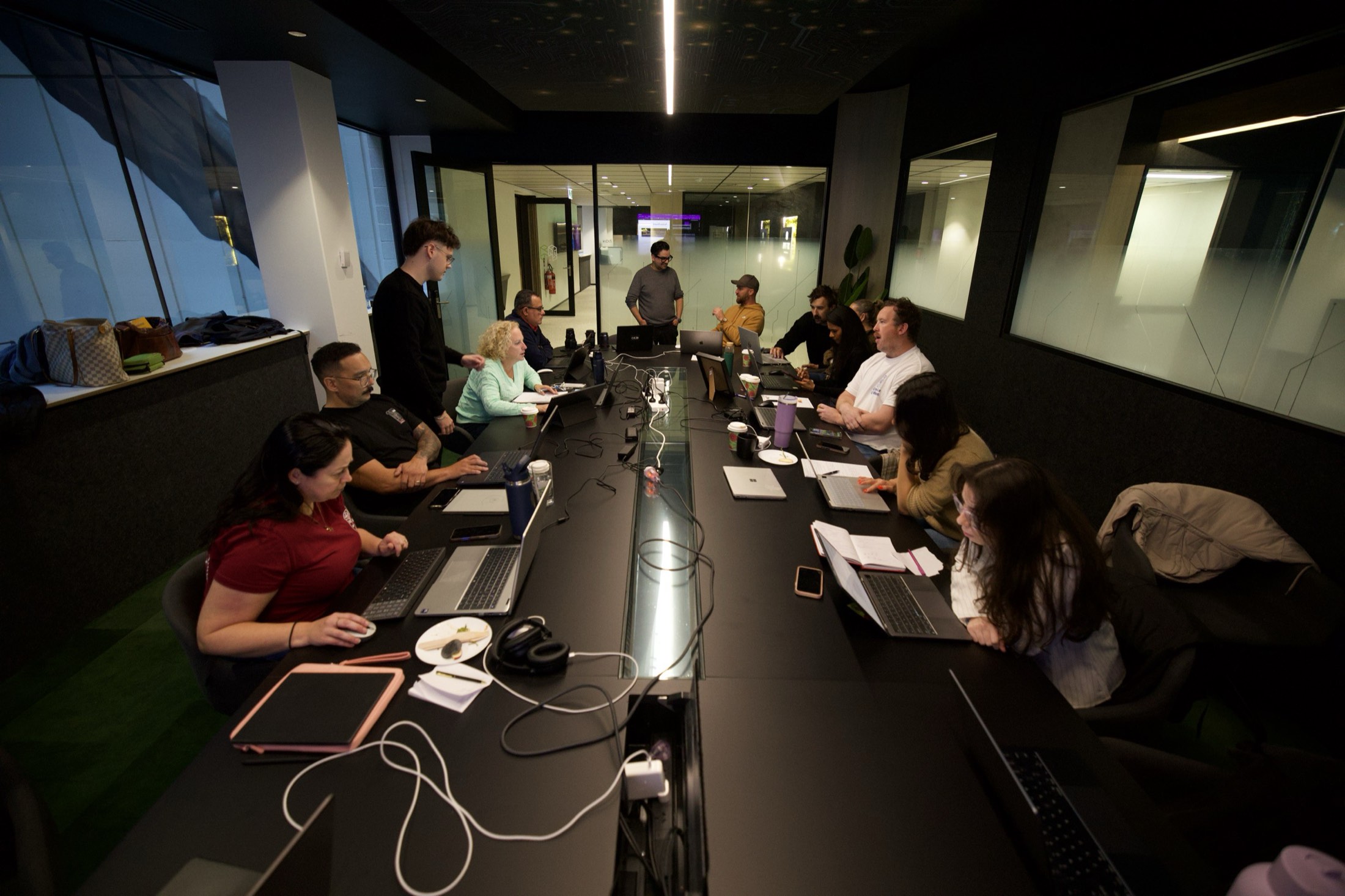
Workshops run from our base in Ardross, Perth: onsite for WA teams, live remote for teams anywhere in Australia. One Perth operations team arrived doing everything by hand and left with three working automations built on their own live work.
The test for training is what exists a month later. If nobody is doing their job differently, you paid for a demo.
When is Scalify not the right fit?
When you need an accredited qualification, go to a university or TAFE. When one person wants to learn quietly in their own time, a self-paced online course costs less and does the job. When you need thousands of seats covered at once, an enterprise consultancy or a learning platform is built for that scale. We are the wrong tool for all three, and we will tell you so on the first call.
How to choose in four steps
Whichever direction you lean, these four questions will get you to the right provider.
Start from the outcome
Decide what must be true a month afterwards: a qualification on a CV, a tool your team uses daily, or a policy rolled out across departments. That single decision rules out most of the field.
Ask what gets built
If the answer is notes and a certificate, you are buying awareness. If the answer is a working automation on one of your own jobs, you are buying capability. Both are legitimate; know which one you are paying for.
Check who turns up
Ask whether the person selling the training is the person delivering it, and whether they use these tools on real client work every week. The gap between those two answers is the gap in your workshop.
Measure it afterwards
Agree before the session how time saved will be measured a month later. A provider that resists measurement is telling you what to expect.
Common questions
How long does team AI training take?
Workshops run in half-day or full-day formats, groups of six to twelve, onsite in Perth or live remote Australia-wide, and a short IT checklist beforehand (accounts provisioned, sample documents approved) means the day itself is spent building, not logging in.
Online or in person?
Both work. In person suits first workshops and teams that share an office, because the room builds momentum. Live remote suits teams spread across sites or states, and it is how we train most groups outside WA. The material and the outcome are the same either way.
What should AI training cost?
Good team training is usually priced per workshop or per program rather than per seat, because the value is in what gets built, not in headcount. Whoever you shortlist, ask for a fixed quote up front. Ours is fixed and agreed before anything is booked.
How do we measure whether it worked?
Time saved is the honest measure. Baseline how long the target jobs take now, then measure again a month after the workshop. Our corporate AI training runs that measurement as part of the program and reports it to leadership.
Updated 6 July 2026
Related
Shortlisting training providers? Ask each one what gets built.
Tell us what your team does all day and we will tell you honestly whether a workshop is worth it, or point you at the option that serves you better.