Copilot Studio consultants for agents your staff actually use.
Copilot Studio lets a business build its own AI agents inside Microsoft 365: staff ask a question in Teams and the agent answers from your documents, policies and procedures. We build them from Perth for businesses anywhere in Australia, so they answer correctly and get used. And if an agent is not the right answer for your job, you hear that from us before any money moves.
What is Copilot Studio?
Copilot Studio is Microsoft's tool for building your own AI agents with little to no code. You point an agent at chosen company knowledge, give it instructions and limits, and publish it where staff already work, usually Microsoft Teams. It is a different product from Microsoft 365 Copilot, the assistant inside Word and Outlook: Copilot is an assistant you licence per person, Copilot Studio is the workshop where you build agents that do a specific job for everyone.
The reason it matters to a mid-size business is simple. Most of your staff already live in Teams and Outlook, and your documents already live in SharePoint, so an agent built here needs no new logins, no new apps and no behaviour change, which is half the battle in getting anything used. Copilot Studio is one part of the Microsoft stack we work across, and where it sits against Power Automate, Power BI and Azure is mapped on our Microsoft AI page.
What can a Copilot Studio agent do for a mid-size business?
The reliable wins are answering staff questions from your own documents, guiding people through structured processes, and taking first-line load off HR and IT. Think of what your office answers on repeat: what the leave policy says, where the site induction form lives, how a new supplier gets set up. An agent in Teams answers those instantly, from the current version of the document, at any hour.
In a business of 50 to 500 people the same questions circle endlessly, and they always land on the same few people. The payroll officer explains the overtime rules again. The safety manager digs out the right procedure again. The IT provider bills another ticket for a password reset. A well-built agent absorbs that first line: it answers what is answerable from the documents, runs short guided processes such as logging a leave request or collecting a complete supplier onboarding form, and hands anything unusual to a person with the details already gathered.
Where it earns its keep fastest is the unglamorous middle of the office: HR policy questions, induction and onboarding, finding the current version of a procedure or prequalification document, and helpdesk deflection. None of it is spectacular. All of it is hours, every week, forever.
When is Copilot Studio the wrong choice?
When the job leaves the Microsoft world or needs judgement across several steps. Quoting from a complex rate card, reading messy inbound paperwork, working across MYOB, Xero and industry software, or answering the phone are all jobs we would build as a custom AI team instead. Copilot Studio is a strong answer-and-guide tool inside Microsoft 365, and it strains when asked to be more than that.
A consultant who only sells Copilot Studio will steer every job into it, because it is the tool on the truck. We also build custom AI teams and customer-facing chat and voice systems, so we have no reason to force the fit. The table below is the short version of the advice we give in the room.
| The job | Copilot Studio | Custom AI team |
|---|---|---|
| Lives inside Teams and Microsoft 365 | Its home ground | Possible, but you lose the built-in convenience |
| Answering from your documents and policies | Very good, when the knowledge is current | Works, but usually more than you need |
| Guided forms and approvals | Good for short, structured processes | Better once steps need judgement |
| Quoting from rate cards | Strains as rules and exceptions grow | Built for exactly this |
| Jobs across MYOB, Xero and industry software | Limited to what connectors reach | Its home ground |
| Phone calls and voice | Not the natural fit | Purpose-built for chat and voice |
The honest test is where the job's information lives and how much judgement sits in the middle. If it lives in documents and the answer is retrieval, Copilot Studio is hard to beat on speed and cost. If it lives across systems and the answer is actual work, build it properly instead. If you are not sure which side your jobs fall on, our AI audit sorts them in half a day and puts a value on every job it finds.
Most failed Copilot Studio agents die the same death: pointed at a messy SharePoint, wrong in their first week, never opened again. The build is the easy part. The knowledge is the work.
How do we build one that staff actually use?
Pick one job, point it at clean knowledge, pilot with one team, then expand. The build takes days. The discipline around it is what makes staff keep using it.
Pick one job
One agent, one job, one audience. An HR policy agent that answers well beats an everything agent that answers vaguely. We pick the job with the most repeated questions and the clearest payback, and we write down what the agent must refuse to answer.
Point it at clean knowledge
We gather the documents the agent will answer from, cull the dead versions, fill the gaps and set the permissions. This is most of the project, and it is the reason the agent answers correctly on day one.
Pilot with one team
The agent goes live with one team who use it on real questions. They find the awkward phrasings and the missing answers, and we tune the responses and the escalations before it goes any wider.
Measure and expand
We look at what staff actually asked, what the agent handled and where it gave up, then extend it to more teams or a second job. If the numbers say it is not earning its keep, we tell you that too.
What does it cost to set up?
One agreed figure before the work starts, sized to the job the agent does and the state of the knowledge behind it. Microsoft's licensing sits on top and is billed on consumption rather than per seat: you buy capacity in advance or pay as you go for what your agents actually use, pooled across the business. We size the likely usage before you commit, so the running cost is a known quantity rather than a surprise.
On data: the agent runs inside your own Microsoft 365 tenancy, respects the permissions you have already set, and under Microsoft's business terms your data is not used to train public models. How we handle security and access on every build is on our security page.
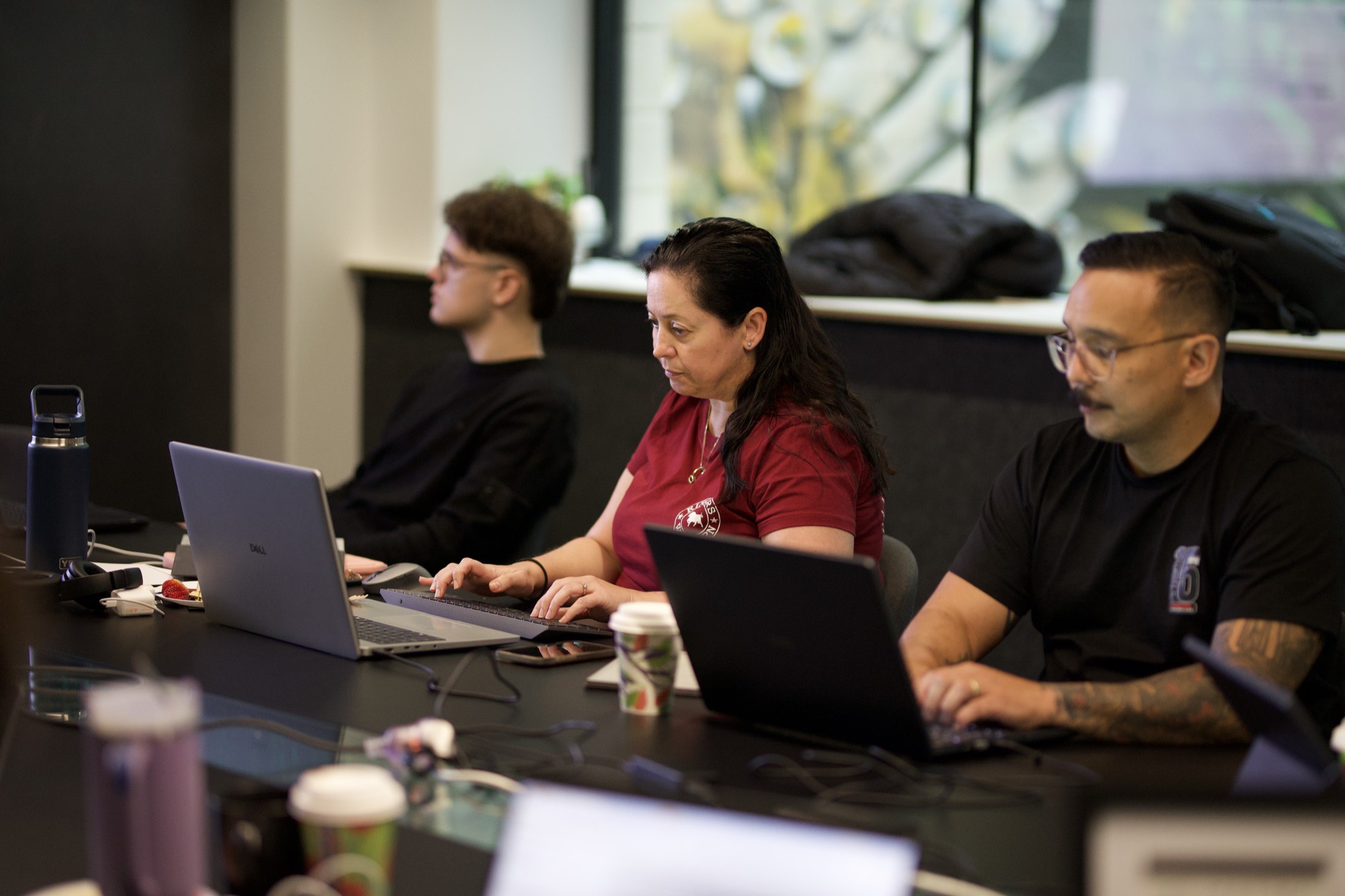
And you do not have to depend on us. Copilot Studio was designed so capable office staff can build with it, and our Copilot training teaches exactly that. General Crane Services WA is the proof: their staff came out of training and built an AI quoting system themselves, we secured and implemented it, and the quotes that used to take days now go out in minutes. The same builds and training run for clients in every state, mostly over a screen, in the room when it helps.
Common questions
Do we need Microsoft 365 Copilot licences before using Copilot Studio?
No. Copilot Studio is licensed on its own, billed on what your agents actually use through capacity bought in advance or a pay as you go arrangement. Microsoft 365 Copilot licences change how some usage is billed, but they are not a prerequisite, and plenty of businesses run Copilot Studio agents without them.
Can it answer from our own documents and policies?
Yes, that is its main strength. You point the agent at chosen knowledge, SharePoint libraries, policy documents, procedures and approved pages, and it answers from those sources with your permissions respected. The catch is that it answers from whatever it is given, so stale or duplicated documents produce stale or contradictory answers. We sort the knowledge before the agent goes anywhere near staff.
Copilot Studio or a custom chatbot, which do we need?
If the audience is your own staff and the answers live in your documents, Copilot Studio inside Teams is usually the faster and cheaper choice. If the audience is customers, or the job has to reach into MYOB, Xero or industry software, a custom build from our chat and voice work usually fits better. We build both, so the advice has no thumb on the scale.
How long does a first agent take?
A focused first agent, one job and one team, typically goes from kickoff to a working pilot in a few weeks. Most of that time goes into sorting the knowledge it answers from, not into the build itself. Agents rushed out in a day are the ones staff try once and never open again.
What are Copilot Studio's limits?
It is only as good as the knowledge you point it at, it can answer confidently when it should escalate, and its reach outside Microsoft 365 is limited to what connectors can do. Jobs that need judgement across several steps or several systems are better built as a custom AI team. We tell you which side of that line your job sits on before you spend anything.
Who maintains the agent after it goes live?
You own it, and it runs in your own Microsoft tenancy. Some clients maintain it themselves after our training, others have us watch it under a support arrangement with the cost settled before it begins. Either way the agent and its knowledge are yours, with no lock-in.
Can our own staff learn to build agents?
Yes, and it is often the best outcome, because the people closest to the questions keep the answers current. Copilot Studio was built for capable office staff rather than developers, and our Copilot training covers agent building hands-on. After our training, General Crane Services WA's staff went away and built an AI quoting system of their own; our part was securing it and making it production-ready.
Updated 31 July 2026
Related
Same questions landing on the same people?
Bring the three questions your office answers most, and we will say whether an agent would absorb them or whether something simpler would do it.