
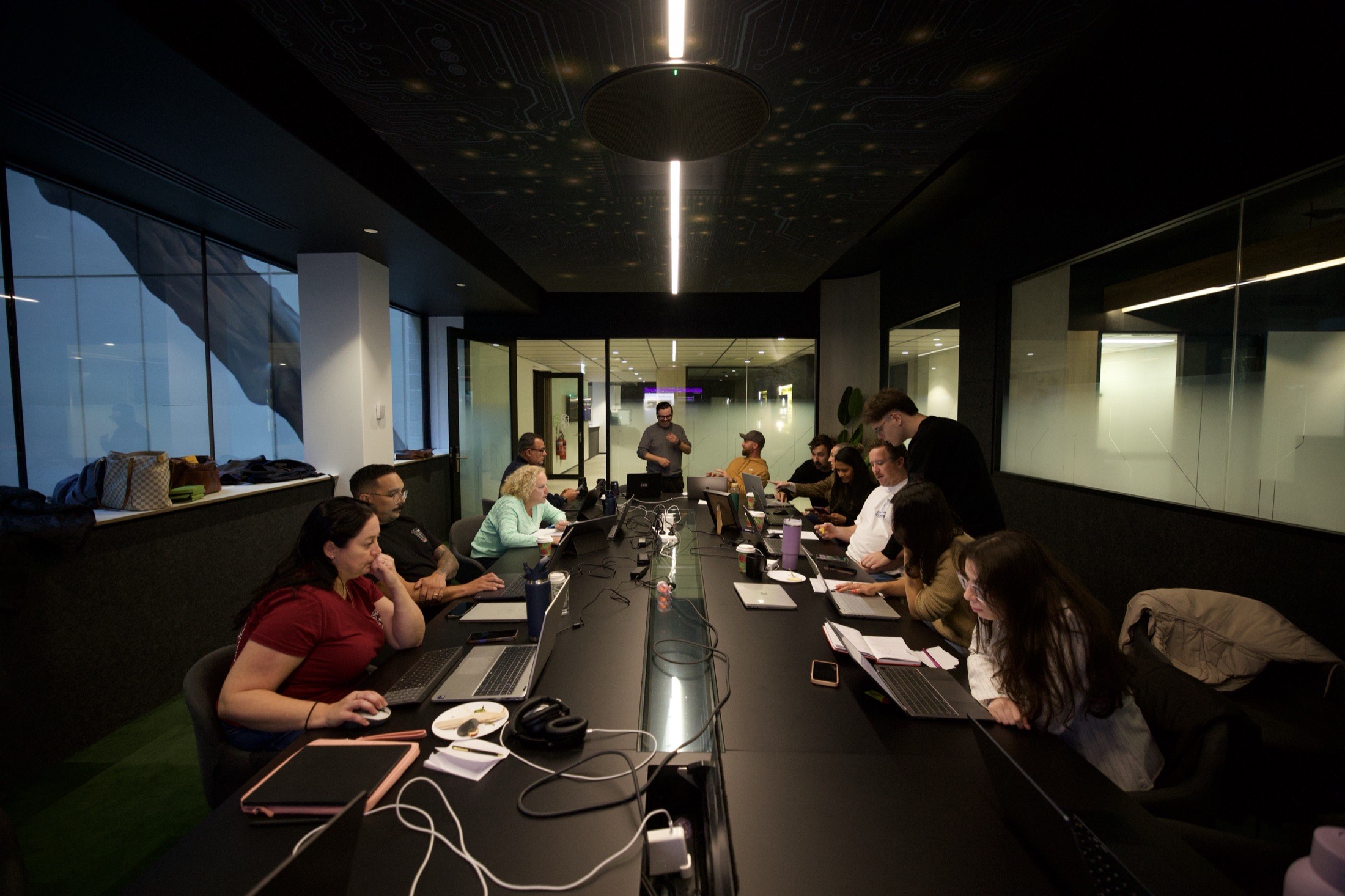
An audit of how the auditors work. The team builds the fixes in November.
ASSSA is a Perth safety and quality consultancy. ISO Certification WA is a certification body. Both are run by Gary, an auditor with more than 20 years in the field. We mapped where the hours go across both businesses, from audit reports to the leads register. The builds happen at a hands-on session with his team at their office in November.
What do ASSSA and ISO Certification WA do?
They are two Perth businesses with one owner. ASSSA helps organisations build and run safety, quality, environmental and information security management systems, and carries out audits, inspections, incident investigations, training and site supervision. ISO Certification WA certifies businesses to ISO standards as a member practice of an accredited certification network.
ASSSA was established in 2009 and works with businesses across Australia, with a focus on mining, construction, oil and gas, transport and manufacturing. ISO Certification WA certifies to standards including ISO 9001 for quality, ISO 45001 for safety, ISO 14001 for environment and ISO 27001 for information security, through a network registered under JAS-ANZ with more than 30 member organisations worldwide. Gary is a lead auditor who is also qualified to assess and certify other auditors.
Where does an auditor's time go?
Into writing up the audit. Every certification audit ends in a report, built section by section in a reporting platform their certification network requires. There are about 15 sections, and each one needs several paragraphs of commentary, written by hand after every audit.
On site, Gary's notes go into his phone and get emailed to himself, then typed into the report at the desk. A first audit starts with every section blank. A repeat audit carries last year's text forward, to be edited line by line. The operational section, which covers what the auditor saw on site, is the biggest of them all. As Gary put it on our first call, "auditing and the time to do it is very stressful and it's very time consuming."
Gary had already tried a general AI chat tool: write the notes freely, ask for them in certification auditor language, paste the result in. It came back too wordy and still needed heavy editing. Each auditor has also built their own shortcuts, so the same kind of report gets written a little differently depending on who writes it.
What did we suggest for the reports?
Talk the notes out, then let AI draft them. The auditor records what they found by voice, and a skill trained on the team's past reports turns it into section-ready commentary in their own style, for the auditor to check and enter. A skill is a saved set of instructions the AI follows the same way every time.
If we could work out a structure from a yap to me not doing this, you're worth your weight in gold.
Yap was our word for the talking part on that first call, and Gary took to it. The reporting platform stays, because the certification network requires it, so the drafts are shaped to fit it rather than replace it. The auditor still does the audit and checks every line before it goes in. The aim is to take away the typing. Gary also wants his auditors to compare shortcuts on the day, so the best of each person's method ends up in the shared skill.
What else did the audit map?
Three more jobs that take time across both businesses: the leads register, proposals and site inspection reports.
- The leads register. One colour-coded spreadsheet tracks work across both businesses: white for work under way, yellow for work still being chased, green once it is ready to invoice, and red for work lost or moved. The bookkeeper invoices from the green rows.
- Proposals. Most start from a past proposal with the details changed by hand. Years of past proposals are on file, which is exactly the material AI needs to learn the house style.
- Site inspections. Consultants inspect construction sites with an app: tick yes or no, take a photo, add comments, and a PDF report comes out. That app can be connected to AI, and one of the consultants already has ideas for taking it further.
It's worked, but it's not sustainable forever. We need to get better.
Two more jobs came up that sit further down the list: checking contractors' safety and quality plans against a client's specification, and drafting management systems, including for information security, the newest standard they work with.
What gets built, and when?
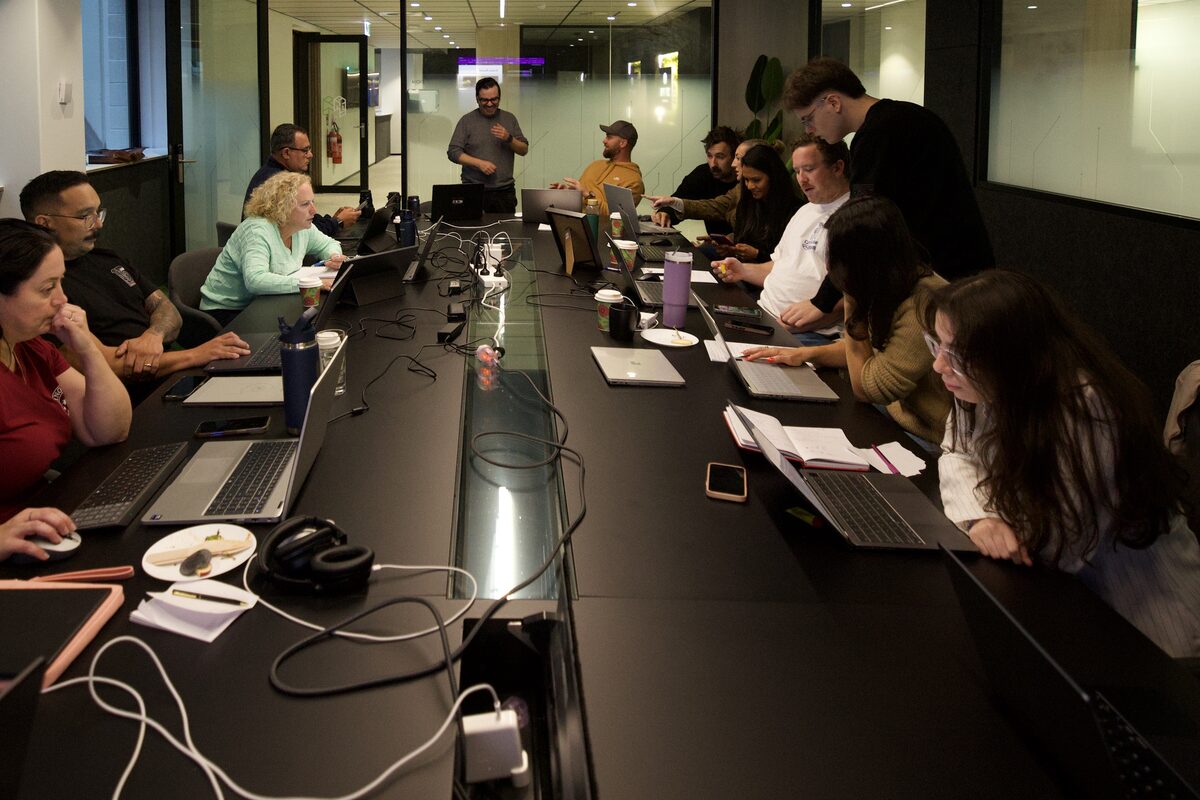
The builds happen at a hands-on session with the team at their office in November. Nothing is built yet. Each group works on its own job, and the aim is for every group to leave with its piece under way, not a page of notes about it.
The plan so far, which the team can still reshuffle:
- Gary and one of the auditors: turning spoken notes into audit report drafts
- A manager and the bookkeeper: rebuilding the leads register as a proper system
- The practice manager and a consultant: proposals, and ideas for the site inspection reports
Before the day, we prepare a prompt from the leads register so the team can start rebuilding it straight away. The register holds client details, so Gary asked for a privacy agreement first, and a copy is shared only once that agreement is signed. A scoping call at the end of September confirms who works on what and which AI tools the team will use. Everyone will get a short setup video beforehand, so the session starts with building, not installing.
| Area | Today | Planned for the November session |
|---|---|---|
| Audit reports | Notes on a phone, emailed, then typed in section by section | Spoken notes drafted into sections by AI trained on past reports, checked by the auditor |
| Leads register | A colour-coded spreadsheet across both businesses | Rebuilt by the team, starting from a prompt we prepare |
| Proposals | Copied from a past proposal, details changed by hand | A workstream on the day: drafts from their own past proposals |
| Site inspections | App checklist, photos and comments, then a PDF | Ideas for connecting the inspection app to AI, explored on the day |
We will update this page after the session.
Why a team session rather than a build handed over?
Because Gary wants his people using AI, not just the tools. In his words, "I want to upskill myself", and he wants his key people alongside him. The people who write the reports and run the register also know best what good looks like.
Gary first looked at our one-day AI workshop, after a client of his had been through it. With several people to bring and work that is specific to the two businesses, he chose a private session for the team at their own office instead.
Could this work for other auditing and consulting firms?
Yes. Any firm whose experts write long reports after every visit has the same shape of problem: the thinking happens on site, and the hours go into typing it up. Spoken notes and a skill trained on past reports suit most reports that follow a set structure.
We start by mapping the work in the AI audit, and reports are one of the jobs we cover in automate reporting.
Common questions
Has ASSSA automated its audit reports?
Not yet. Turning spoken notes into audit report drafts is the first workstream for the team session in November. So far the work has been mapping: how reports are written today, where the time goes, and what the drafts need to fit.
Does AI replace the auditor?
No. The auditor still does the audit and checks every line of the report. Gary made the point himself on our first call: there will always be an auditor doing the job. The aim is to take away the typing, not the judgement.
Do they need to change their reporting software?
No. The certification network they belong to requires a specific reporting platform, so the drafts are shaped to fit it. The work changes how the words get written, not where they go.
What happens before the team session?
A scoping call at the end of September confirms who works on what and which AI tools the team will use. We prepare a prompt so the leads register rebuild can start straight away, and the team gets a short setup video so the day starts with building.
Updated 17 September 2026
More of our work
Still typing up every report by hand?
If your experts do the work on site and lose hours writing it up, an audit will show you where AI takes the typing off them first. Tell us how reports get written in your business today, in plain language, with no pitch.