
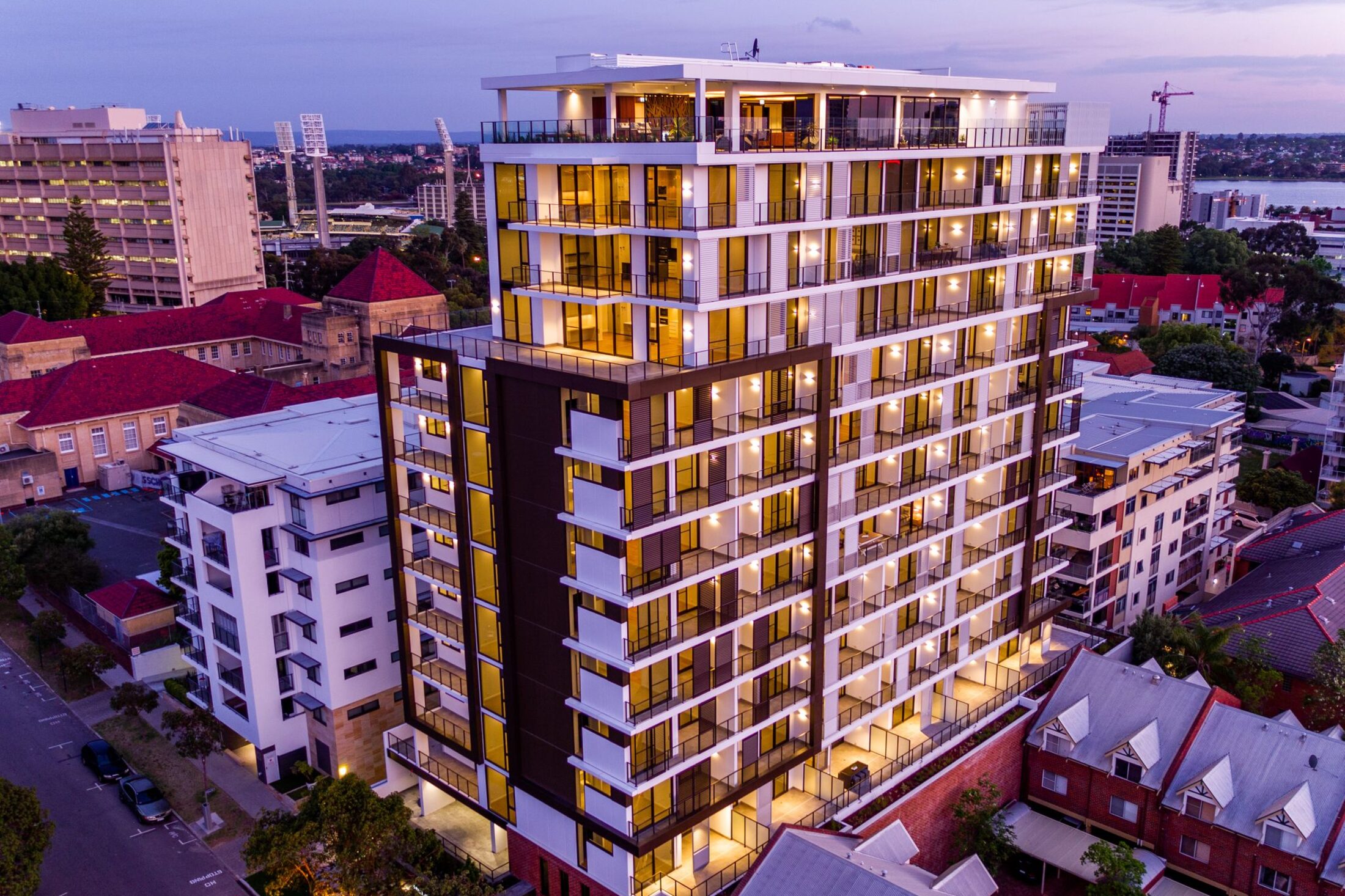
A facade contractor already building with AI. Next, one system from tender to handover.
Vertex Facades designs, fabricates and installs aluminium and glazed facades for commercial builders across Western Australia. Its managing director, Adam, already builds with AI on his own. On 24 September he is spending a day with us to start the system he wants to run every job on, from the first tender enquiry to handover.
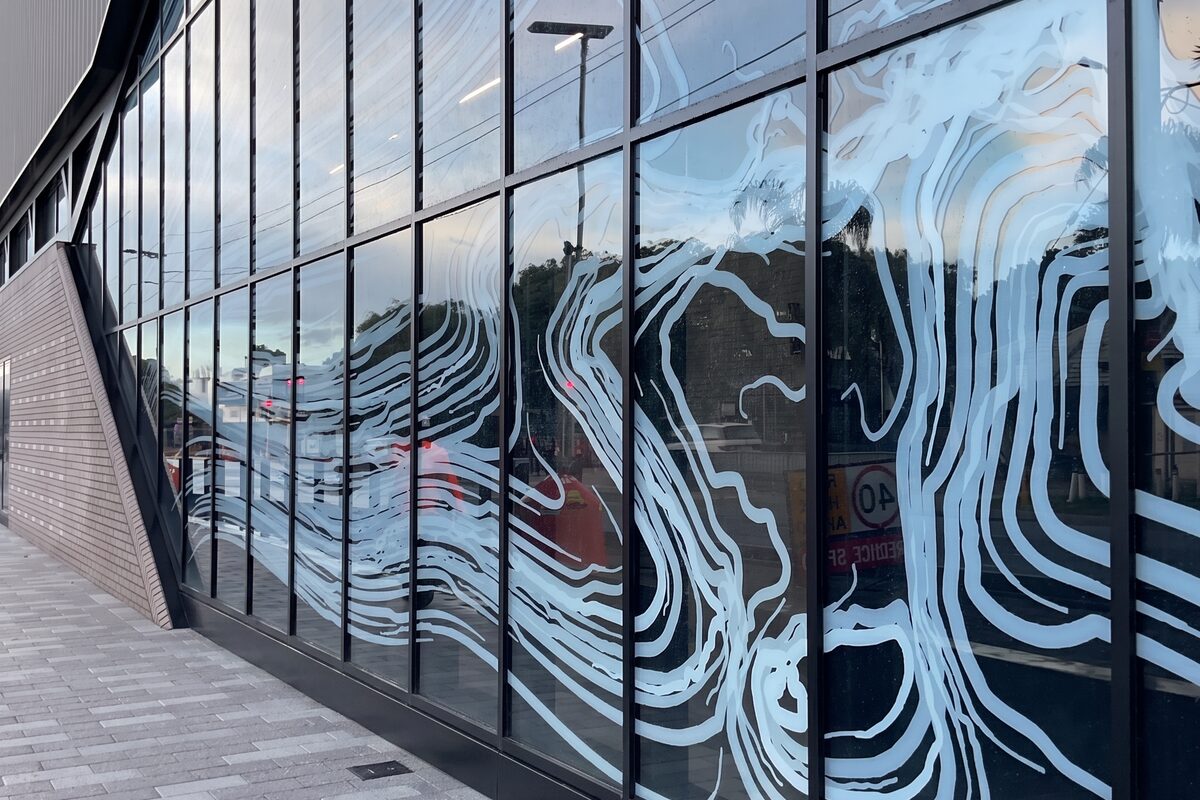
Who is Vertex Facades?
Vertex Facades is a specialist aluminium and glazed facade contractor for commercial builders across Western Australia. It designs, fabricates and installs curtain wall, structural glazing, aluminium windows and doors, and feature cladding, from a fabrication workshop in Gnangara backed by offshore manufacturing partners.
Its public project list runs from transport infrastructure to aged care. On METRONET, Vertex delivered the fluted aluminium cladding on the Bayswater Station bridge, and glazed facades across five Victoria Park-Canning stations with every site live at once. It has also supplied and installed windows, doors, fire doors and blinds for more than 10,000 mining camp rooms. Adam has had a window business for 15 years, and started a joinery business about a year ago.
How does Vertex use AI today?
Every day, but without a system. Adam uses AI a fair bit, and the team uses it to write and review documents, with no shared instructions and nothing connected to their SharePoint or email yet. In his words, "It's all pretty ad hoc, to be honest."
Estimating is where it already helps. For some tenders, the team loads the architectural drawings into AI in batches and has it do the takeoffs, build quantity tables and flag any quantity it had to assume, so a person can check it. That has sped things up, but it still runs case by case. What Adam wants next is to rely on it: "The thing I want to get better at is being able to actually trust that it's doing the right thing."
He has built with AI himself, too. When he started the joinery business about a year ago, he built its website in a day with an AI site builder, and he says their staff have come through that website rather than through job ads.
What does Adam want to build?
One system that runs a job from the first tender enquiry to handover. He has already mapped every step of that process, and he wants a single place for the CRM, tenders, proposals, quotes, purchase orders, project management and site logging.
- Tenders: download the documents from the tender website, send them to suppliers for pricing, and file the quotes that come back, steps that today rely on someone remembering to do them
- Takeoffs and quotes: quantities from the drawings, supplier prices loaded into the quote sheet, set rates for installation and delivery, and a standard commercial proposal
- Budgets and purchase orders: when a job is won, a budget for each line item, with project managers raising purchase orders against those lines and received orders passed through to the accounts
- Packing lists: imported shipments checked against the job's items, flagging anything that should have been in a shipment but was not, so the supplier can be contacted
- Site logging: installers record which window they worked on, on which day, and what they did, so the office can see each team's output by the week or the month
- Site issues: photos pinned to the floor plan, allocated to a person, closed out with a record, and sorted into completed, incomplete, defective or variation work
None of it is complicated on its own. The work is doing it in order. As Adam put it on our call, "It's just a case of picking each use case and let's nail this and then let's get on to the next one."
| Step | Today | The plan |
|---|---|---|
| Tender documents | Downloaded, sent to suppliers and filed by hand | Collected, sent and filed by the system |
| Takeoffs | AI in batches, case by case, checked by a person | The same rules every time, with assumed quantities flagged |
| Quotes | Excel quote sheets | Standard proposals and quotes in one system |
| Site issues | A separate site-management tool | The same functions inside Vertex's own system |
Why build it instead of buying software?
Because Adam could not find software that does what Vertex needs. Quoting runs on Excel, the accounting software is too limited for how they work, and the site-management tool they use is good for defects and site photos but, in his words, "doesn't do anything else."
Connecting AI to that site tool would have meant paying the vendor a yearly fee to open up its back end, and next to building his own, that made no sense to him. So the plan is to study what the site tool does well and build those functions into Vertex's own system, alongside everything else.
You don't even understand how simple it is for us. But how hard it is to find software that does what we need.
What has Adam already tried?
A working prototype. Shortly before our call, he spent about five minutes in Claude mocking up an installation output monitor for the site team. "Obviously it was a demo, but it was fully functional."
What a demo does not answer is how it runs for a real crew. Adam's questions were the right ones: where the photos are saved, how the data is tracked, and "what if you don't have signal, can you still log in?" About 20 installers would use it, and as he said, "They're all on their phones anyway."
Time is the other gap. He builds fast once he is into it, but he has a business to run, and he would rather learn from someone who has done it than work it all out alone. "I'd rather engage with someone like yourself who can show us the way."
What is the plan for the workshop?
Adam has a seat at our one-day AI workshop in Perth on 24 September. He is refreshing his tender-to-handover process map to bring in, and the day is for starting the build: one stage, on a proper database, as the first piece of the bigger system.
Before the day, he has our onboarding videos and a build skill that reads his plan, asks him questions to tighten it, and turns it into a build plan. After the day, he has our follow-up support while he keeps building.
The full system is the long-term goal, and it will take more than a day. On the call we talked through the tendering and CRM side as a place to start, and how to give the site app a proper back end so it can go out to the crew. We will add what he built once the workshop has run.
Adam has already done the hardest part. He knows every step of his jobs and he has mapped them. The day is about putting a proper back end under that map, one stage at a time.
Could a system like this work for other subcontractors?
Yes. Most commercial subcontractors run the same chain: tender, takeoff, quote, purchase orders, deliveries and site work, usually spread across spreadsheets and tools that do not talk to each other. The person who knows that chain best is usually the one running the business.
We help in two ways. Our workshop gets the people who know the work building with AI on their own jobs, the way General Crane Services started its quoting system. And when a business wants it built for them, we do that through custom development, with tender automation as a common place to start.
Common questions
Is Vertex Facades replacing all its software at once?
No. The plan is to build the system in stages, getting one workflow right before starting the next. The full system, from tender enquiry to handover, is the long-term goal.
Will every installer need their own AI subscription?
No. Installers would sign in to the app from their phones. AI is used to build and change the app, so only the person building it needs an AI plan.
What is a takeoff?
A takeoff is the count of everything a job needs, measured from the architectural drawings. For a facade contractor that means how many windows, of which types, and how many square metres. Suppliers price those quantities and the quote is built from them.
Updated 17 September 2026
More of our work
Mapped every step of your jobs, but can't find software that fits?
If your jobs run on spreadsheets and a list of steps someone has to remember, we can help you build the system around the way you already work. Tell us about it, in plain language, with no pitch.